


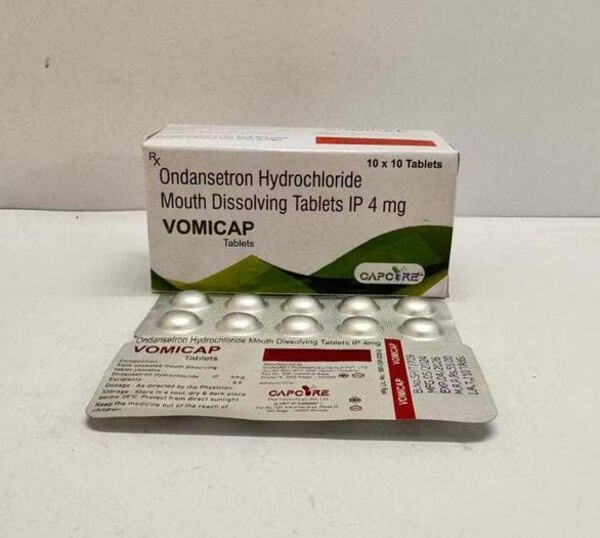
A product name alone does not tell you whether two Vomicap supplies contain the same ondansetron strength, use the same dosage form, or meet the same release specification. By the end, you will have a practical way to verify the product, classify defects, review stability and clinical suitability, and qualify a manufacturer or supplier before placing an order.
Key takeaways
- Match active ingredient, strength, dosage form, label, standard, and pack configuration.
- Ask for batch release tests, stability data, and the manufacturer’s licence documents.
- Trace defects to manufacturing, packaging, transport, or storage before rejecting a supplier.
- Confirm ondansetron’s approved use, dose, warnings, and patient suitability before procurement claims.
Confirm the Vomicap Product Before Comparing Suppliers
A product name alone cannot establish equivalence. Before comparing suppliers, verify that both products have the same active ingredient, strength, dosage form, approved label, pharmacopoeial standard, and pack configuration.
1. Confirm the active ingredient named on the carton, blister, specification, and Certificate of Analysis. For an ondansetron product, record the exact strength per tablet and check that the label, invoice, and batch documents agree.
2. Identify the dosage form: conventional tablet, dispersible tablet, or orally disintegrating tablet. These forms differ in excipients, disintegration behaviour, administration instructions, and packaging needs.
3. Match the approved product specification, including assay range, appearance, identification test, dissolution requirement, and storage statement. A similar-looking tablet is not equivalent if its specification or release criteria differ.
4. Compare excipient declarations, tablet colour and markings, blister material, units per strip, total pack size, shelf life, and approved label wording. Record the manufacturer, manufacturing site, licence details, batch number, manufacture date, and expiry date.
5. Reconcile those details against the supplier’s invoice and purchase source before accepting stock. Mismatched batch data, altered overprinting, missing traceability, or an unusually low price warrants quarantine and verification.
Treat reports described as vomicap tablet problems separately from proof of a defective batch. Poor symptom control, sedation, headache, or constipation can reflect expected pharmacology, patient factors, prescribing errors, counterfeit stock, or a batch-specific failure; equivalence must be established before investigating the cause.
Use Release Tests and Quality Records to Find Real Defects
A visual change cannot prove a formulation defect: confirm it against the approved specification and release evidence. Reports described as vomicap tablet quality issues, including poor symptom control, sedation, headache, or constipation, also require separation from expected ondansetron effects, patient factors, prescribing errors, counterfeit stock, and batch failure.
Request these records for the affected batch:
- Approved product specification, test methods, and product-specific Certificate of Analysis
- Batch manufacturing record and batch packing record, including granulation, lubricant quantity, compression force, hardness, coating, and line-clearance entries
- Out-of-specification and deviation investigations, change-control history, complaints, recalls, and stability data
- Quality agreement identifying dossier ownership, batch release, complaint investigation, change approval, and pharmacovigilance responsibilities
Compare the complaint with testing rather than relying on a retained tablet’s appearance.
| Finding | What it can indicate | Confirmatory check |
|---|---|---|
| Assay passes, dissolution fails | Slow or incomplete drug release despite correct strength | Dissolution profile and disintegration |
| Chipping, capping, or sticking | Compression, granule, or lubricant problem | Friability, hardness, thickness, weight variation, and record review |
| Mottling, swelling, odour, or blister change | Moisture ingress, coating variation, or storage damage | Moisture, stability, pack-integrity, and storage records |
| Variable dose between tablets | Poor powder blending or compression control | Content uniformity and assay |
Microbial limits support contamination assessment where the specification requires them. A failed result, unexplained trend, or missing record warrants quarantine and documented investigation; a passed assay alone does not clear the batch.
Separate Manufacturing Failures from Packaging and Storage Damage
Compare the affected tablet with retained units from the same batch before calling it a manufacturing defect. A true batch problem often appears in multiple intact packs and aligns with assay, dissolution, disintegration, hardness, friability, or stability results; post-distribution damage is more likely when only exposed packs show change.
Record the pattern, not just the complaint. Inspect and photograph:
- Mottling, colour change, swelling, sticking, picking, edge chipping, or unusual odour
- Softened, cracked, leaking, cloudy, or incompletely sealed blisters
- Wet cartons, crushed shippers, broken seals, altered overprinting, or missing batch details
- Tablets from unopened packs and intact control units retained from the same batch
Preserve the returned tablet, blister, carton, shipper, photographs, storage history, and the time and place of discovery. Testing only the returned unit can hide humidity ingress, heat exposure, repeated temperature cycling, transport impact, poor stock rotation, or tampering.
Review transport records against the procurement specification: permitted temperature, maximum excursion time, moisture protection, FEFO rotation, and responsibility for investigating excursions. Quarantine stock when the invoice, batch number, expiry, manufacturer, licence details, or purchase source do not reconcile.
Do not classify poor symptom control, sedation, headache, or constipation as Vomicap tablet problems without checking the prescribed dose, patient factors, interactions, counterfeit stock, and batch-specific test results. A confirmed Vomicap tablet quality issue requires comparison with the approved specification and a documented investigation.
Check Ondansetron Suitability Before Making a Procurement Claim
A reported Vomicap tablet problem—poor symptom control, headache, constipation, or excessive sedation—does not prove a manufacturing defect. Review the approved ondansetron label, patient factors, prescribing decision, and batch evidence before calling it a vomicap tablet quality issue.
| Review point | Questions before buying or promoting | Consequence if missed |
|---|---|---|
| Adverse effects | Are headache, constipation, diarrhoea, fatigue, raised liver enzymes, or QT prolongation described in the label? Does sedation suggest another medicine or illness? | Expected pharmacology may be misreported as tablet failure. |
| Contraindications | Is there hypersensitivity to ondansetron or excipients? Will the product be used with apomorphine? Does the patient have congenital long-QT syndrome, bradyarrhythmia, heart failure, or low potassium or magnesium? | The purchase claim can expose patients to avoidable arrhythmia or a prohibited combination. |
| Interactions | Does the intended market use apomorphine, QT-prolonging medicines, serotonergic medicines, or tramadol? Are CYP3A4 inducers likely to reduce exposure? | Treatment failure, serotonin toxicity, or additive QT risk may be blamed on the batch. |
| Indication and presentation | Is the approved use chemotherapy-, radiotherapy-, or postoperative nausea and vomiting? Is the tablet conventional, dispersible, or orally disintegrating, and is its strength suitable for the labelled age and dose? | Promotion for dyspepsia, routine vomiting, or an unapproved population creates a clinical and regulatory problem. |
Check electrolyte status and ECG risk when the label calls for them. Quarantine a batch only after identity, assay, content uniformity, dissolution, and stability evidence supports a quality finding; a symptom report alone cannot establish one.
Qualify a Vomicap Tablet Manufacturer or Supplier in Punjab
A search for vomicap tablet manufacturer mohali is only a location lead, not qualification. Before approving a contract-manufactured batch, match the invoice, manufacturer name, licence details, batch number, expiry date, purchase source, and transport records. Quarantine cartons with altered overprinting, mismatched batch data, missing traceability, or an implausibly low price.
1. Request the manufacturing licence covering the exact tablet dosage form and premises, plus current GMP or Schedule M compliance evidence. Confirm that the licence names the site making your batch, not only a marketing or trading company.
2. Request the approved product specification showing ondansetron strength, dosage form, excipients, pack size, label, appearance, and pharmacopoeial standard. Obtain a product-specific Certificate of Analysis with assay, content uniformity, dissolution, disintegration, friability, microbial limits, and release dates.
3. Review the signed batch manufacturing record, batch packing record, test methods, recent stability data, deviation and out-of-specification investigations, change-control history, and product-recall procedure. Missing records prevent you from linking a tablet problem to a controlled process.
4. Put responsibilities in a quality agreement: identify who owns the dossier, releases batches, investigates complaints, approves changes, and performs pharmacovigilance. Preserve returned tablets, intact controls from the same batch, packaging, photographs, storage history, and discovery details.
Apply this evidence standard to Signoret Pharmaceuticals Private Limited or any Vomicap tablet supplier in Punjab; a catalogue listing cannot replace batch-specific proof. Stop approval until discrepancies are explained in writing and independently verified.
Related product
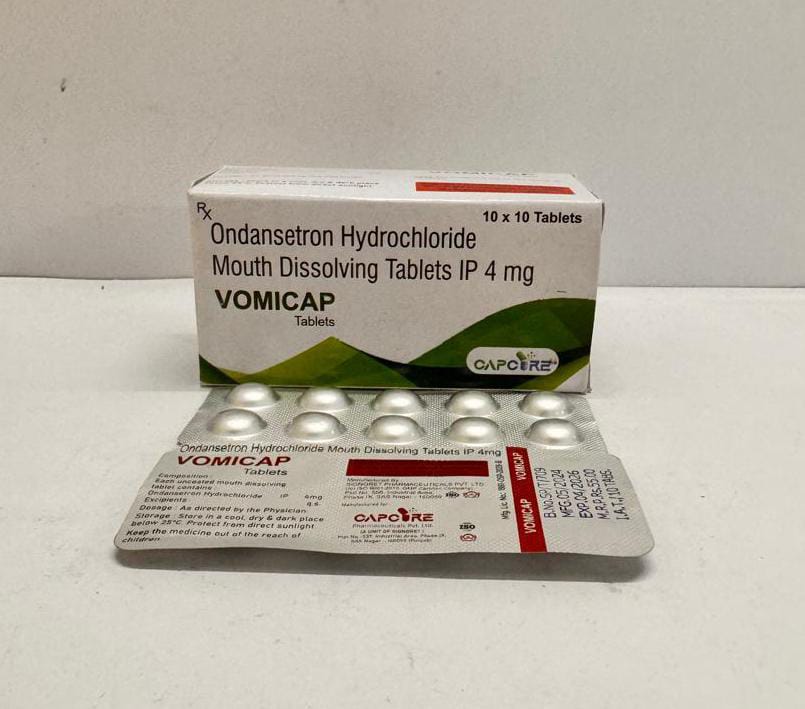 | Vomicap Tablets Vomicap is an effective antiemetic formulation containing Ondansetron, designed to provide quick relief from nausea, vomiting, and motion sickness. View product → |
Frequently asked questions
What should you confirm before comparing Vomicap tablet suppliers?
Confirm that both products have the same active ingredient, strength, dosage form, approved label, pharmacopoeial standard, and pack configuration.
Which records help identify Vomicap tablet quality issues?
Review the certificate of analysis, batch manufacturing record, batch packing record, release test results, stability data, and complaint history.
How can you distinguish manufacturing defects from packaging or storage damage?
Compare release results with retained samples, inspect the blister or strip seal, review transport records, and check storage temperature and humidity records.
What should you verify before making an ondansetron suitability claim?
Check the approved indication, dose, contraindications, drug interactions, warnings, and the exact product label for the proposed Vomicap tablet.
How do you qualify a Vomicap tablet manufacturer or supplier in Punjab?
Verify the manufacturing licence, GMP documentation, site details, quality agreement, batch traceability, complaint process, and supply records before placing an order.