
A calcium-and-vitamin-D liquid does not have one universal FDA status: its formula, claims, serving directions and intended users determine whether it follows a supplement or drug pathway. By the end, you can classify the product, identify the documents a US-facing brand needs, and decide whether the formulation and manufacturer are ready for launch.
Key takeaways
- Classify the syrup as a supplement or drug before planning FDA submissions.
- Use a Supplement Facts panel and substantiate every US label claim.
- Request assay, microbial, stability, batch-release and traceability records.
- Qualify the Mohali manufacturer’s licence, GMP controls and export documentation.
Which FDA pathway applies to Calcap D3 Syrup?
Resolve the US category before asking about calcap d3 syrup fda approval healthcare brands. A calcium-and-vitamin-D liquid sold as a dietary supplement generally receives no FDA premarket approval. The responsible company must still verify lawful ingredients, safety, specifications, manufacturing controls and truthful labelling.
| Option | What it means | When it applies |
|---|---|---|
| Dietary supplement | No routine FDA premarket approval; substantiation and compliant labelling remain mandatory | The formula and marketing stay within supplement requirements |
| Drug | Commercial distribution normally requires an approved New Drug Application or Abbreviated New Drug Application, unless an exemption applies | The formula, dosage form, claims or target users make it a drug |
| Structure/function claim | Substantiate the claim, use the required disclaimer and notify FDA within 30 days after first marketing it | The claim describes support for normal body structure or function, not disease treatment |
Claims that the syrup treats, cures, diagnoses or prevents rickets, osteoporosis, hypocalcaemia or another disease can move it into drug territory. Calling the product a supplement does not protect a disease claim.
A food facility registration, drug establishment registration, product listing, US agent appointment or FDA notification is not FDA approval. A registration identifies an establishment or filing; only an approved drug application establishes the relevant drug approval pathway.
Before importing, private-labelling or advertising, obtain qualified US regulatory counsel’s classification of the exact formula, dose, claims and target users. That review determines whether the proposed calcap d3 syrup fda approval route is a supplement compliance exercise or a drug application.
What must the US label and evidence package prove?
The package must prove that the exact formula, directions, claims and label fit the chosen US category. “Calcap D3 syrup FDA approval” is not established by a certificate of analysis or a facility registration; the evidence must support the product’s actual legal positioning.
1. Obtain the complete quantitative formula: elemental calcium per 5 mL or declared serving, the calcium salt, vitamin D3 strength and units, excipients, preservatives, sweeteners and flavours. Record the intended serving size, maximum daily amount, age-specific directions, pregnancy instructions, contraindications and interaction warnings. These details form the basis of the FDA requirements for calcium syrup.
2. Match the panel to the category. A supplement needs a compliant Supplement Facts panel; a drug needs Drug Facts or the labelling authorised in its approved application. Check ingredient order, net quantity, manufacturer or packer details, lot number, expiry date, storage conditions, tamper evidence and a US contact address or telephone number.
3. Test whether directions cover infants, young children, older adults and pregnant users. Do not infer paediatric suitability from an adult formula or calculate a child’s dose by body weight alone. Review claims and substantiation before approving artwork, especially statements about deficiency, bone disease or prevention.
Add warnings for renal disease, hypercalcaemia and medicines whose absorption calcium can reduce, with separation instructions where appropriate. A label that omits these risks can fail the product-risk review even when its ingredient list is accurate.
How do you verify dose, stability and batch quality?
Freeze the product specification and testing plan before comparing quotations. FDA requirements for calcium syrup begin with the declared elemental calcium per 5 mL, not the total mass of calcium carbonate, calcium citrate or another salt.
Define calcium and vitamin D3 assay limits, validated methods, sampling plans, dose uniformity and stability-indicating data; low-concentration vitamin D3 demands controls for dispersion, light exposure and analytical suitability.
| Comparison | What to verify | Why it matters |
|---|---|---|
| Elemental calcium | Milligrams of calcium per serving | Salt mass can overstate the actual calcium dose |
| Vitamin D3 assay | Validated method, acceptance limits and stability results | Poor dispersion or light exposure can produce unreliable results |
| First-batch result | Release assay plus shelf-life and in-use data | One passing batch does not prove household control |
For a multi-dose liquid, require validated water quality, microbial limits, preservative-effectiveness testing when a preservative is used, fill-volume control, container-closure compatibility and in-use stability after opening. Ask for:
- The approved master formula, specifications, test methods and representative certificate of analysis.
- Recent finished-product results, water and microbial results, process-validation status and proposed-container stability data.
- Packaging specifications and documented deviation, out-of-specification and recall procedures.
Set age-specific dosing only after reviewing dietary intake, other calcium or vitamin-D products, age-based requirements and upper intake limits. Compare sugar, excipients, flavour, shelf life and packaging with the intended users. A first-batch assay or generic GMP certificate does not prove control through the full shelf life or household use.
How should a healthcare brand qualify a Mohali manufacturer?
Make Calcap d3 brand sourcing a documented supplier-qualification decision, not a search for an “FDA-approved manufacturer.” Request the current manufacturing licence, approved dosage form and composition, licence validity, applicable GMP evidence, site address, licensing authority and inspection history. A facility certificate does not prove that the specific syrup, strength, pack size or label is authorised.
Ask for these product-specific records:
- Approved master formula, specifications, test methods, representative certificate of analysis, recent finished-product and water or microbial results, process-validation status, proposed-container stability data, packaging specifications, deviation and out-of-specification procedures, and recall records.
- A supply agreement naming the legal manufacturer, product licence holder, brand owner and batch-release authority. Assign change control, complaints, recalls, deviations, stability, traceability and dossier ownership in writing.
- For a Mohali site, evidence supporting US import documentation, exporter details, customs records and FDA inspection readiness. Confirm the actual manufacturing address rather than relying on a group company or marketing office.
For sale in India, classify the formula as an ordinary licensed formulation, a new drug under the New Drugs and Clinical Trials Rules, 2019, or an FSSAI health supplement. Confirm state drug-control or central permissions, the FSSAI category, permitted claims, label statements, batch testing and required records.
A brand assessing Signoret Pharmaceuticals Private Limited should apply the same evidence standard as for any supplier; pediatric supplement compliance mohali depends on product authorisation, not location.
Related product
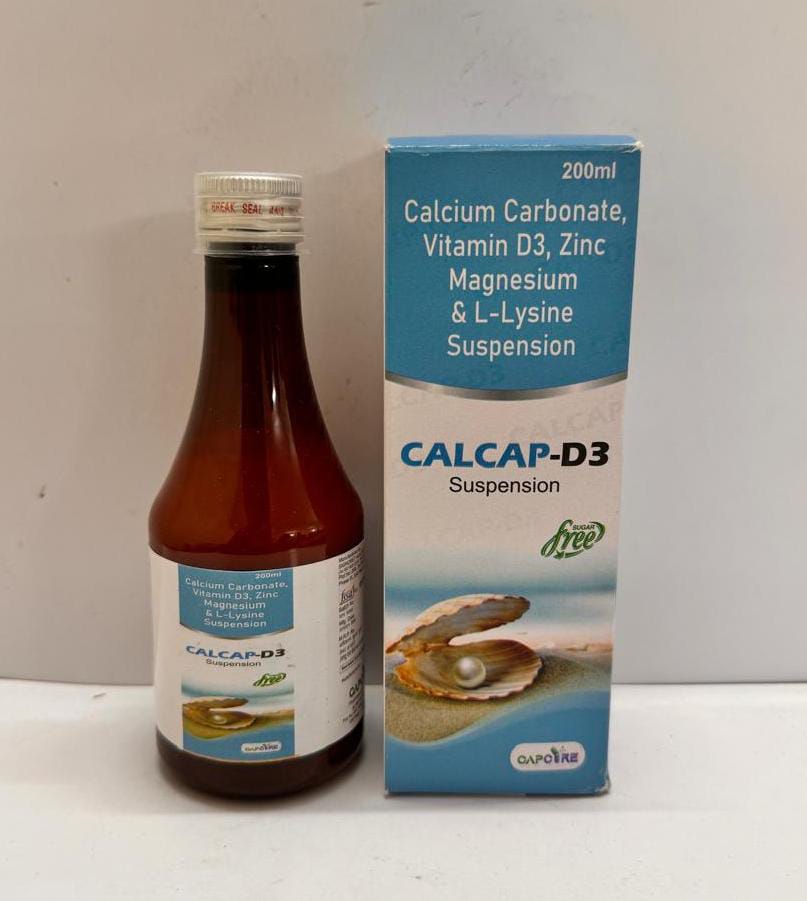 | Calcap-D3 Syrup Calcap-D3 Syrup is a tasty and effective blend of Calcium and Vitamin D3, specially formulated for children, pregnant women, and the elderly. View product → |
What should you decide before signing or launching?
Use a staged go-or-no-go review before signing or launching; calcap d3 syrup fda approval healthcare brands depends on the target market, not the product name.
- Freeze the formula, elemental calcium and vitamin D3 dose, age range, maximum daily amount, claims and intended market.
- Document classification, obtain regulatory review, qualify the supplier, audit quality systems, approve specifications and validated methods, then review representative batches.
- Complete final-container stability, artwork and label-claim sign-off, import controls, exporter and customs documents, complaint handling and recall procedures before release.
- For calcap d3 brand sourcing, confirm permissions, dossier ownership, batch-release responsibility and change control. Include pediatric supplement compliance mohali in the review if India is the market.
Compare the syrup with a US-compliant calcium-and-vitamin-D product:
| Criterion | Calcap D3 syrup | US-compliant comparator |
|---|---|---|
| Elemental dose | Confirm per serving | Confirm target dose |
| Sugar and excipients | Check restrictions | Check acceptability |
| Shelf life and packaging | Require final-container data | Verify evidence |
| Testing evidence | Review batch and stability results | Compare methods and results |
| MOQ and lead time | Obtain written terms | Compare supply risk |
| Relabelling effort | Assess artwork changes | Confirm US-ready label |
Choose another product if the user needs a defined therapeutic dose, cannot take an oral liquid, must avoid added sugar or an excipient, or the market assigns another category. If disease-treatment language is essential, plan the drug pathway instead of preserving supplement positioning.
Frequently asked questions
Does Calcap D3 Syrup need FDA premarket approval in the United States?
A calcium-and-vitamin-D liquid sold as a dietary supplement generally does not receive FDA premarket approval. The responsible company must verify lawful ingredients, safety, manufacturing controls, specifications and truthful labelling. A product making disease-treatment claims may fall under the drug pathway instead.
What must a US label for Calcap D3 Syrup contain?
A supplement label needs the required identity statement, Supplement Facts panel, serving size, amounts of calcium and vitamin D, other ingredients, net quantity, manufacturer or distributor details and any required warnings. Claims must be truthful, substantiated and consistent with the product’s legal category.
How can a healthcare brand verify syrup dose, stability and batch quality?
Request the master formula, finished-product specifications, assay results for calcium and vitamin D, microbial limits, preservative testing, fill-volume checks, stability data, batch-release certificates and traceability records. Match the approved formula and label dose against independent testing and retained samples.
How should a brand qualify a Mohali pharmaceutical manufacturer?
Review the site’s manufacturing licence, GMP evidence, quality agreement, batch documentation, sanitation controls, water system records, laboratory capability, deviation and complaint procedures, recall process and export support. Confirm that the facility can manufacture the exact liquid dosage form and pack size.
What should a brand decide before signing a manufacturing agreement?
Define the US product category, formula ownership, ingredient specifications, label claims, testing responsibility, stability programme, change-control process, release authority, minimum batch size, lead time, packaging, shipping conditions and handling of recalls or rejected batches.
Keywords