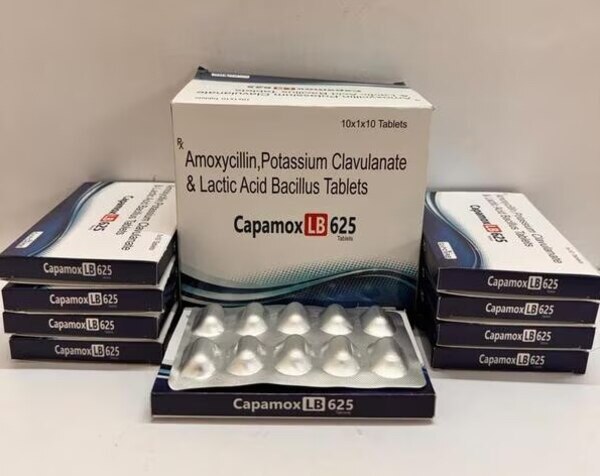
A repeat purchase order does not prove that the next Capamox LB 625 batch was made under the same controlled process, tested to the same specification, or released from the same licensed site. By the end, you will have a batch-comparison method, a CGMP checks checklist, and a document gate for deciding whether to accept, investigate, or reject a repeat shipment.
Key takeaways
- Review every repeat batch against the approved master manufacturing document.
- Match batch numbers, assay results, packaging records, and release signatures.
- Investigate unexplained documentation errors or visible tablet and pack differences.
- Reject shipment until deviations, OOS results, and release decisions are closed.
What CGMP continuity means when you reorder Capamox LB 625
A repeat order cannot rely on the first batch’s approval or certificate of analysis. Every Capamox LB 625 batch needs an approved master manufacturing document, executed manufacturing and packing records, in-process results, laboratory data, deviation and OOS disposition, and an authorised release decision.
If you are investigating capamox lb 625 tablets for cgmp compliance problems, verify the formula against licensed product documents and current artwork, not the trade name or quotation.
A written quality or technical agreement with the third-party manufacturer must assign responsibility for:
- Specifications, approved suppliers, and master records
- Changes, deviations, and OOS investigations
- Complaints, recalls, and stability studies
- Final batch release
Verify the manufacturing licence, approved premises address, authorised dosage form, product authorisation, inspection status where available, and actual manufacturing and testing locations. A Mohali address or general GMP statement does not prove that the batch was made and tested at the licensed site.
Compare Schedule M or WHO GMP documentation when the market or contract requires it.
| Evidence | What it establishes | What it does not establish |
|---|---|---|
| Batch-specific records and release decision | Capamox LB 625 batch compliance | Approval of a later batch |
| Certificate of analysis | Results against named methods, limits, and specification version | Complete CGMP control |
| Product authorisation and artwork | Correct formula, strength, dosage form, and claim | Acceptable manufacturing execution |
| Schedule M or WHO GMP evidence | Site-standard alignment where required | Product quality or regulatory approval |
A supplier’s validation claim alone cannot close these gaps.
The Capamox LB 625 CGMP checks that belong on every batch review
A repeat-batch review starts with the approved formula and specification, not the trade name. Confirm amoxicillin 500 mg, clavulanate 125 mg, and the declared Lactic Acid Bacillus component against licensed product documents and current artwork. These Capamox LB 625 CGMP checks must produce batch-specific evidence.
1. Verify raw-material identity, supplier approval, sampling, and release status. Review separate amoxicillin assay and related-substances results, clavulanate assay and degradation controls, identification, content uniformity or mass variation, dissolution, and microbiological quality. One combined assay cannot prove both active ingredients comply.
2. If the LB component is live, request its identity method, viable-count or approved potency method, sampling plan, microbial limits, storage conditions, and evidence that granulation, compression, coating, drying, and shelf life preserve the declared count.
3. Check blend uniformity, tablet weight variation, hardness, friability, disintegration, dissolution, microbial limits, packaging records, and stability or retain-sample trends. Review granulation and compression-room humidity, hold times, and moisture protection because clavulanate degrades with moisture.
4. Confirm container-closure suitability, packaging-line clearance, and beta-lactam controls: segregation, cleaning validation, campaign planning, personnel flow, and air handling. General cleaning claims do not prove penicillin carryover control.
5. Separate release evidence from ongoing process control. Review the certificate of analysis and release decision for the batch, then examine continued-process-verification or product-quality-review trends, including assays, related substances, dissolution, complaints, deviations, and rejected batches.
This practical Capamox LB 625 batch compliance review exposes failures that a passing certificate can hide, especially recurring humidity, packaging, or probiotic-viability problems.
How to compare the first approved batch with the repeat batch
Treat the first approved batch as the reference, not as permission to reuse its paperwork. To resolve tablet order documentation problems and confirm Capamox LB 625 batch compliance, establish that the repeat batch matches the approved formula, process, tests, packaging, and release decision.
| Document or check | Approved first batch | Repeat batch |
|---|---|---|
| Product specification | Approved version and limits | Same version, limits, and LB claim |
| Manufacturing and packing records | Executed records and in-process results | Batch-specific executed records and results |
| Certificate of analysis | Batch number, dates, tested method, laboratory identity | Same fields, with current results |
| Laboratory and release records | Methods, deviation log, OOS investigation, release authorisation | Current versions, dispositions, and authorised signatory |
| Packaging and stability | Artwork, stability data, retain-sample observations | Current artwork, trends, and observations |
Ask whether the supplier changed an API source, clavulanate grade, probiotic source, excipient grade, compression tooling, coating material or process, packaging foil, desiccant, test method, or manufacturing site. For every change, require the change number, impact assessment, regulatory assessment, validation or comparability evidence, and approval date.
Request continued-process-verification or product-quality-review trends for blend uniformity, weight, hardness, friability, disintegration, dissolution, assay, related substances, microbial results, probiotic counts, complaints, deviations, and rejected batches. Match the batch number, manufacturing date, expiry date, specification limits, and authorised signatory. A reused order number or certificate cannot replace batch-specific evidence.
How to investigate documentation errors and a visibly different batch
Quarantine the shipment before trying to explain a mismatch.
For tablet order documentation problems, compare batch number, manufacturing and expiry dates, signed entries, approval dates, printouts, audit trails, and certificate details; unsigned entries, overwritten results, unexplained corrections, back-entered data, shared electronic logins, missing printouts, incomplete deviation closure, or a certificate without its test method and specification limits are data-integrity and traceability failures, even when the final result passes.
| Finding | Immediate action | Evidence to compare |
|---|---|---|
| Record mismatch | Hold release and reconcile every page | Batch records, laboratory raw data, audit trail, signatures, approval dates |
| Different tablets | Quarantine and compare samples | Approved retains, artwork, specifications, pack count, blister layout |
| Unexplained change | Open change-control review | Tooling, coating, packaging material, line clearance, supplier and method-change records |
Check capamox lb 625 cgmp checks against the approved reference for colour, odour, dimensions, tablet weight, hardness, dissolution, pack count, blister layout, and label information. A difference requires a documented impact assessment, not a visual explanation.
For an assay, dissolution, blend-uniformity, microbial, or probiotic-count OOS result:
- Preserve the initial preparation, raw data, chromatograms or plates, calculations, instrument status, sampling details, analyst work, and manufacturing history.
- Require an approved OOS investigation; a passing retest does not erase the original failure.
- Establish product impact, root cause, batch disposition, and corrective and preventive action before release.
The buyer’s acceptance gate for a repeat Capamox LB 625 shipment
Do not accept a repeat shipment because the previous Capamox LB 625 batch passed. For Capamox LB 625 tablets for CGMP compliance problems, hold the new batch until quality review has batch-specific evidence.
- Batch number, manufacturing date and expiry date
- Approved product specification and current artwork
- Certificate of analysis
- Executed batch manufacturing and packing records
- Batch-release record
- Deviation and OOS dispositions
- Change-control approvals
- Stability or retain-sample evidence
- Transport or storage records when temperature or humidity control applies
The certificate must name the exact product and strengths, the LB claim where applicable, specification version, test-method version, laboratory, acceptance limits, results, and authorised signatory. Match each entry to the batch number, dates, packaging configuration, and release decision.
| Evidence | Passes the gate | Fails the gate |
|---|---|---|
| Licensed site | Licence, approved premises, dosage form, product, and actual testing location match | Mohali address appears, but manufacturing or testing occurred elsewhere |
| Technical control | Agreement assigns specifications, suppliers, changes, deviations, OOS, complaints, recalls, stability, and release | Purchase order contains only price, quantity, and delivery terms |
| Ongoing control | Current process-trend or product-quality-review data covers assay, dissolution, hardness, microbial results, deviations, and rejected batches | Supplier offers only a general GMP statement or old validation claim |
A buyer assessing CGMP tablet manufacturing Mohali from Signoret Pharmaceuticals Private Limited or another third-party manufacturer should request licence and site evidence, beta-lactam segregation and cleaning controls, the technical agreement, and current trend records. Location is not compliance.
Release only after an authorised quality reviewer signs batch-specific approval. Otherwise quarantine the shipment, open a documented investigation, or reject it; a lower unit price cannot offset recalls, retesting, interruption, and regulatory exposure.
Related product
 | Capamox-LB 625 Tablets Capamox-LB 625 is a powerful combination of Amoxicillin (500mg), Potassium Clavulanate (125mg), and Lactic Acid Bacillus, offering broad-spectrum... View product → |
Frequently asked questions
What does CGMP continuity mean when reordering Capamox LB 625?
It means verifying each new batch against the approved master manufacturing document, executed manufacturing and packing records, in-process results, laboratory data, deviation and OOS disposition, and authorised release decision.
Which CGMP checks belong on every Capamox LB 625 batch review?
Check the batch number, manufacturing and expiry dates, approved formulation, manufacturing steps, in-process controls, assay and other laboratory results, packaging records, deviations, OOS investigations, and release authorisation.
How should you compare the first approved Capamox LB 625 batch with a repeat batch?
Compare the master document version, ingredient quantities, equipment and process parameters, test methods, specifications, yields, packaging components, labels, laboratory results, and release signatures.
How should documentation errors or a visibly different Capamox LB 625 batch be investigated?
Quarantine the shipment, record the discrepancy, request the applicable deviation or change-control investigation, verify laboratory and packaging evidence, and obtain written quality-unit disposition before acceptance.
What is the buyer’s acceptance gate for a repeat Capamox LB 625 shipment?
Accept the shipment only after identity, documentation, laboratory results, packaging condition, deviations, OOS status, and authorised batch release all meet the approved requirements.
Keywords