
A delivered consignment is not ready for sale simply because the cartons arrived intact or the supplier supplied a Certificate of Analysis. You will learn how to quarantine suspect stock, inspect every packaging level, reconcile batch records, investigate defects, and decide whether to release, reject, or escalate the shipment.
Key takeaways
- Mark incoming cartons “QUARANTINE—QUALITY RELEASE PENDING” before stock entry.
- Record broken seals, wet cartons, missing labels, and transport damage separately.
- Match the batch number to the release certificate and purchase documents.
- Hold affected stock during OOS, storage-excursion, or complaint investigations.
Quarantine the consignment before you accept it into stock
Do not place Pantocap DSR Capsules into saleable inventory when the truck arrives. Mark the consignment “QUARANTINE—QUALITY RELEASE PENDING” and complete a receiving record before signing the proof of delivery. This control addresses pantocap dsr capsule for quality assurance issues at the point they can still be contained.
- Record the delivery date and time, transporter, vehicle or shipment reference, invoice number, purchase-order number, carton count, received quantity, and the name of the receiving employee.
- Photograph the outer cartons before opening. Record wetness, crushing, punctures, broken seals, opened tamper evidence, or temperature damage, and retain the affected packaging.
- Match the product name, Pantocap DSR strength, capsule dosage form, manufacturer details, licence details, MRP, and approved artwork to the purchase order.
- Verify the batch number, manufacturing date, expiry date, storage statement, and quantity on cartons, inner boxes, and blister strips. Escalate any mismatch.
- Inspect seals and transport indicators, if supplied. Record the temperature logger result or documented transport condition; do not assume a sound carton proves correct storage.
- Obtain the Certificate of Analysis and confirm that its product name, batch number, test methods, specifications, results, approval status, and authorised signatures correspond to the delivered batch.
Keep the stock physically separated from released goods and block it in the inventory system. A CoA supports review but does not replace receiving controls; release only after authorised quality personnel resolve discrepancies, damage, and sampling requirements.
Use a visible-defect checklist and separate damage from product failure
Start the Pantocap DSR capsule inspection before moving the consignment into saleable stock. Photograph each carton as opened, retain all packaging, and place affected units on hold; a visible defect supports investigation but does not prove that every capsule has failed.
1. Inspect shipper cartons and inner boxes for crushing, punctures, water marks, open seals, and displaced labels. Compare damage across cartons: compression concentrated on one side points toward transport, while the same defect across multiple cartons suggests a packaging or manufacturing problem.
2. Examine every sampled blister or strip for crushed cavities, pinholes, leaking seals, delamination, missing capsules, and broken tamper evidence. Check logger records and documented storage excursions against the labelled conditions, because heat or moisture can affect blister protection, capsule appearance, and release performance.
3. Inspect capsules for abnormal deformation, split shells, empty shells, sticking, discolouration, powder leakage, and inconsistent fill. Do not return suspect units to saleable stock by mixing them with acceptable units; use a statistically justified sampling plan and expand it when defects repeat.
4. Match the printed product name, strength, batch number, manufacturing date, expiry date, storage statement, MRP, manufacturer details, and licence details across the carton and blister. A mismatch with the shipper, invoice, or certificate is a traceability defect even when the capsules look normal; hold the affected quantity for controlled reconciliation.
Transport damage usually follows the physical injury pattern. A repeated capsule or fill defect across intact cartons points toward manufacture and requires formal investigation, not visual acceptance.
Reconcile the batch number and demand the records behind release
A batch number mismatch is a traceability failure even when the capsules look normal. Place the affected quantity on hold and compare every identifier with the purchase order, approved artwork, invoice, and Certificate of Analysis (CoA). Receipt into stock is not quality release.
Record the reconciliation as follows:
| Document | What must match | What a mismatch means |
|---|---|---|
| Shipper, carton, blister, invoice | Product name, strength, dosage form, batch number | Hold the consignment; investigate traceability |
| Carton, CoA, purchase order | Manufacturing date, expiry date, quantity | Do not accept a substituted or undocumented batch |
| Artwork and pack | Manufacturer, licence details, storage statement, MRP | Treat relabelling or unapproved print as a packaging defect |
| CoA and release records | Batch number, specification, authorised release | Demand controlled evidence, not an informal assurance |
For a delayed or disputed batch, check the CoA for:
- Identification, assay and impurities for pantoprazole and domperidone, with results, units, acceptance limits and test dates.
- Dosage-unit uniformity, dissolution or drug-release results for each release component, moisture where specified, microbial quality and packaging-integrity results.
- The approved specification number, laboratory method, sampling date, analyst review and authorised quality-release signature.
- Retest or expiry status, storage history, deviations, OOS investigations and linked CAPA records.
Do not accept a replacement CoA that merely changes the batch number. Controlled investigation and distribution records must explain the discrepancy; otherwise the pantocap dsr capsule batch issues remain open and recall tracing is unreliable.
Investigate OOS results, storage excursions, and customer complaints
Place the affected batch in physical and system quarantine and open a deviation investigation before any further sale, transfer, or retesting. This is the controlled response to pharmaceutical quality assurance problems, not an informal discussion with the supplier.
1. Record the batch number, quantity received and distributed, test result, complaint reference, and quarantine location. Preserve blisters, cartons, photographs, shipping records, retain samples, and the original laboratory worksheets.
2. Investigate an assay, dissolution, impurity, or other OOS result against the approved specification and test method. Review analyst training, calculations, equipment status, sample preparation, and laboratory controls; do not discard the original result. Resampling or retesting requires scientific justification approved within the investigation.
3. Compare temperature and humidity logger data, excursion dates, duration, and maximum readings with the labelled storage conditions. Examine blister barrier performance and assess possible effects on pantoprazole degradation, capsule appearance, and release performance before deciding disposition.
4. Capture each complaint’s exact batch, quantity, distribution, defect description, photographs, storage history, and adverse event. Escalate possible therapeutic failure, wrong product, contamination, or repeated defects to the marketing authorisation holder and assess market action or recall.
5. Document the conclusion, quality-unit approval, customer notification, and corrective and preventive action. Release only with evidence that the batch remains compliant; otherwise reject, return, or recall it. A few passing capsules cannot overturn a failed investigation.
Choose a manufacturer that can support controlled batch disposition
A manufacturer earns your release decision by producing controlled evidence, not by offering a verbal assurance. A search for capsule quality assurance mohali does not create a separate local standard: ask the supplier to work to its approved product specification, Indian drug licence, GMP procedures, and documented batch-release controls.
Before releasing a disputed batch or repeating the order, ask for:
- The signed CoA, approved test methods, laboratory approval status, analyst and quality-unit signatures, and results for assay, dissolution, impurities, appearance, and moisture where specified.
- The batch manufacturing record, packaging record, deviation and OOS investigation, retain-sample findings, and a written disposition: release, reject, rework, or continued hold.
- Reconciliation of the batch number, dates, quantity, carton and blister records, and any relabelling; never accept a replacement document that bypasses the original discrepancy.
- Transport logger data, storage records, and an assessment of whether heat or moisture could affect pantoprazole stability, capsule appearance, or modified-release performance.
- Complaint, recall, and CAPA history for comparable batches, plus the sampling plan and confirmatory-testing rationale.
| Evidence requested | Acceptable response | Warning sign |
|---|---|---|
| Batch disposition | Signed quality-unit decision linked to the original investigation | Verbal release or unexplained retest |
| Repeat-order controls | Current specifications, retained samples, trend review, and change notification | “Same as last time” without records |
| Supplier oversight | Licence, GMP inspection records, and named quality contact | Sales team alone handles quality questions |
Signoret Pharmaceuticals Private Limited should be judged by this same evidence standard before any disputed Pantocap DSR batch enters saleable stock.
Related product
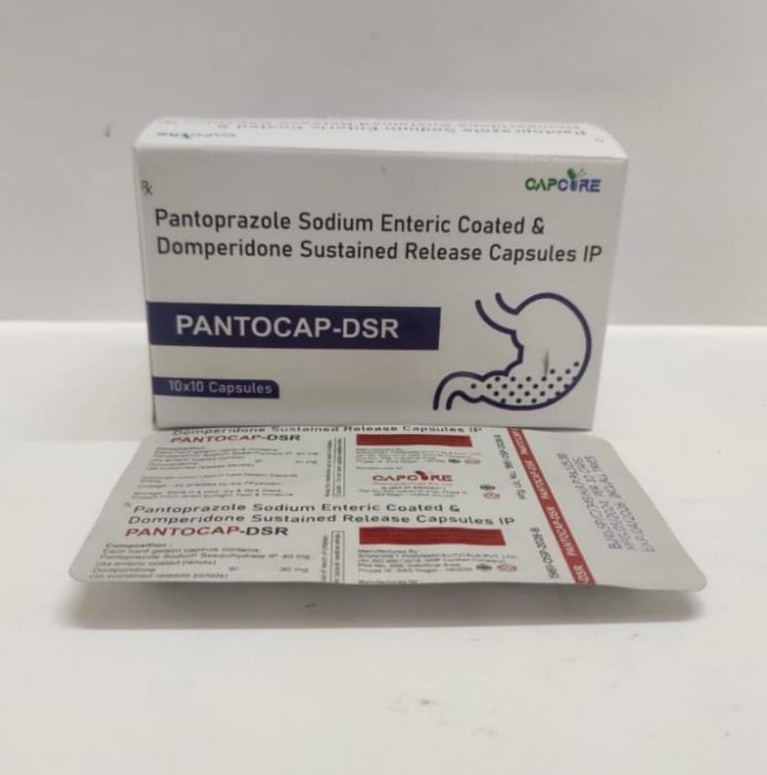 | Pantocap-DSR Capsules Pantocap-DSR is a powerful combination of Pantoprazole (40mg) and Domperidone (30mg SR) designed for effective management of acid reflux, GERD,... View product → |
Frequently asked questions
What should you do when Pantocap DSR Capsules arrive?
Place the consignment in quarantine, mark it “QUARANTINE—QUALITY RELEASE PENDING,” and complete the receiving record before accepting it into saleable stock.
How should you inspect Pantocap DSR Capsules for visible defects?
Check seals, cartons, blisters, labels, capsule appearance, moisture damage, tampering, and missing batch or expiry details. Record transport damage separately from suspected product failure.
Which records should you request for a Pantocap DSR capsule batch?
Reconcile the batch number across cartons, invoices, delivery records, and the certificate of analysis. Request the batch release documentation and manufacturing records needed for disposition.
What should you do after an OOS result or customer complaint?
Keep the affected batch on hold, open a documented investigation, review storage and transport conditions, assess related complaints, and release or reject the batch through authorised quality personnel.
Keywords