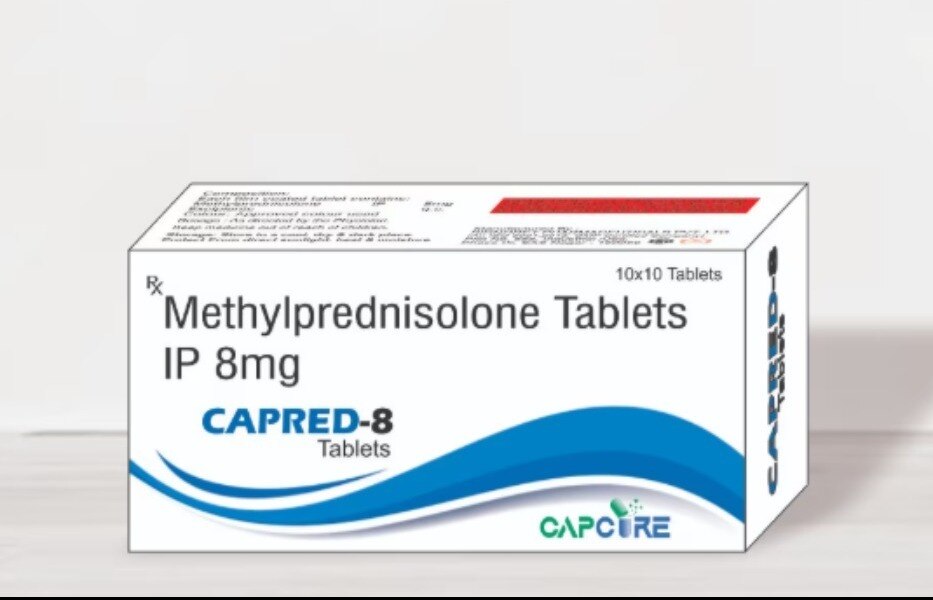
A healthcare brand needs more than a tablet sample or a trade name before it commissions Carped-8 development. You will be able to define the development brief, compare formulation evidence, prepare the required records and judge whether a Mohali manufacturing partner can transfer the product into controlled commercial production.
Key takeaways
- Ask for comparative trial-batch data, not only a sample pack.
- Define dose, tablet profile, packaging and target markets in the brand brief.
- Request stability protocols, scale-up records and finished-product release results.
- Verify GMP systems, documentation controls and batch reproducibility before selecting a partner.
What Carped-8 formulation support should include
A new deflazacort tablet requires formulation development from the active ingredient forward. Transferring an existing Carped-8 formula into third-party or private-label manufacture requires documented reproducibility, not merely a sample pack or pilot batch.
| Development route | What it requires | Main risk |
|---|---|---|
| New deflazacort tablet | Preformulation, excipient screening, release design, trials and stability evidence | An unsuitable blend or release profile |
| Existing Carped-8 formula transfer | Approved formula, specifications, methods, process instructions, equipment fit and transfer batches | The transferred process fails at commercial scale |
The trade name alone cannot establish the active ingredient, strength, dosage form, pharmacopoeial standard, release profile, approved indication or regulatory category. Confirm every point from the product dossier before selecting excipients or copying a marketed presentation.
A 6 mg or 8 mg product is not automatically the same formulation or regulatory category because its name is similar.
Carped 8 formulation development should include:
- API and dossier review, preformulation and excipient screening
- Immediate-release or modified-release design, laboratory trials and compression trials
- Pilot batches, analytical testing, dissolution and stability studies
- Packaging selection for moisture, oxygen and light protection
- Scale-up, technology transfer and transfer-ready manufacturing documents
Comparative dissolution helps compare batches, but it does not prove bioequivalence, therapeutic equivalence or approval. Carped 8 brand support must define evidence from the active ingredient, jurisdiction, dosage form, strength and regulatory pathway.
The brand brief and development workflow
Prepare a written brief before development starts; it becomes the control document for tablet formulation development for brands.
1. State the quality target product profile: proposed strength, dosage form, immediate- or modified-release requirement, intended market, regulatory pathway, target assay, content-uniformity expectation, dissolution profile, disintegration time, hardness, friability, appearance, pack size, shelf life and proposed container-closure system.
2. After acceptance, review the API and excipients, then design the formulation and assess risks. Record critical material attributes, including API particle-size distribution, polymorphic form, moisture, density, flow and compressibility.
3. Run laboratory trials and select compression or granulation conditions. Direct compression is not automatically safer: it avoids liquid addition and drying, but demands strong flow, compactibility and segregation resistance. Wet granulation can improve flow and uniformity, while adding drying and residual-moisture risks.
4. Control critical process parameters such as blending time, lubricant addition, granulation end point, drying, milling, compression force, turret speed and coating conditions. Develop and verify analytical methods, then produce a pilot batch.
5. Approve a stability protocol and evaluate the proposed packaging before technology transfer. The workflow ends with commercial batch manufacture and release against approved specifications.
For pharmaceutical formulation development Mohali, request records showing how each trial links material attributes and process parameters to assay, content uniformity, dissolution and other quality attributes. A single dissolution point cannot expose every failure; justify the apparatus, medium, volume, agitation speed, sampling times and discriminatory conditions.
How to compare Carped-8 trial formulations
Do not select the first batch that passes assay. Compare every candidate against the same quality target, including assay, content uniformity, dissolution, disintegration, hardness, friability, thickness, weight variation and visual defects.
| Criterion | Compare across batches | Warning sign |
|---|---|---|
| Assay and content uniformity | Mean result and individual-unit spread | A passing mean can hide low-dose units outside limits |
| Dissolution and disintegration | Profile at justified sampling points, not one release result | Slower release after higher compression or excess lubricant |
| Mechanical quality | Hardness, friability, thickness and weight variation | Capping, lamination, sticking, picking or punch wear |
| Appearance | Chips, cracks, mottling, picking and edge damage | Defects that worsen during longer compression runs |
For dissolution, record the apparatus, medium, volume, agitation speed, sampling times and discriminatory conditions. A single routine release point can hide differences caused by API particle size, lubricant level, compression force or excipient grade.
Low-dose Carped-8 batches need a sampling plan covering the blender, hopper, transfer points and beginning, middle and end of compression. One composite blend sample can conceal localised variation from poor blend uniformity, particle-size or density differences, electrostatic behaviour, hopper segregation and transfer-related segregation.
Treat capping, lamination, sticking, picking and punch wear as process or tooling findings, not cosmetic issues. Higher compression force can reduce friability while extending disintegration and slowing dissolution. A carped 8 formulation development review should select the batch with the best balanced profile, while carped 8 brand support should document the evidence behind that choice.
The evidence package for stability, scale-up and release
A pilot batch becomes transfer-ready only when another trained team can reproduce and release it from controlled records. The handover file for tablet formulation development for brands should contain:
- Master formula record and batch manufacturing record
- Raw-material specifications and supplier certificates of analysis
- Finished-product specification
- Validated or verified analytical methods and method-transfer records
- In-process controls and dissolution-profile data
- Stability protocol, deviation reports and change-control records
Scale-up is not laboratory multiplication. Assess blender geometry and fill level, granulator energy, dryer airflow, mill screen, lubricant distribution, compression dwell time and press speed; each can change granule density, tablet strength or dissolution. A pharmaceutical formulation development Mohali partner should link these parameters to controlled critical quality attributes.
The marketed container-closure system belongs in stability studies, not only bulk or temporary laboratory packaging. Use 25°C/60% RH or 30°C/65% RH for long-term storage and 40°C/75% RH for accelerated storage when the applicable regional requirement supports those conditions.
| Option | Moisture protection | Oxygen/light protection | Practical consideration |
|---|---|---|---|
| Alu-alu blister | Highest barrier | Strong protection | Useful for sensitive tablets; higher packaging complexity |
| PVC/PVdC blister | Moderate to high | Limited to moderate | Compare film grade with stability data |
| Bottle with desiccant | Depends on closure and desiccant | Limited unless opaque | Monitor opening exposure and desiccant control |
Qualification, calibration, data integrity, traceability, deviation handling and change control must operate under Schedule M where applicable in India, or WHO GMP where required by the buyer or market. That evidence, not a successful pilot alone, supports release and commercial transfer.
How to assess a Mohali development and manufacturing partner
A search for carped 8 tablets for formulation development healthcare brands mohali should lead to evidence, not a location claim.
Assess the partner’s applicable Indian manufacturing licence, licence scope, Schedule M or WHO GMP evidence, product permissions, qualified water, HVAC and compressed-air systems, cleaning and cross-contamination controls, equipment qualification, laboratory capability, trained personnel, recent inspection or audit findings and inspection-ready records. Pharmaceutical formulation development Mohali is credible only when these controls are documented.
| Evidence to compare | Controlled partner | Weak partner |
|---|---|---|
| Development transfer | Master formula, scale-up batches, in-process controls and approved specifications | Pilot sample or catalogue claim |
| Laboratory release | Qualified equipment, analyst training, method transfer, system suitability and data integrity | Unexplained assay or dissolution results |
| Accountability | Written ownership of formula, methods, deviations, OOS investigations, stability and changes | Responsibilities agreed informally |
For third-party or private-label production, carped 8 brand support must define who owns each record and decision. Confirm the product dossier before work begins: active ingredient, strength, dosage form, pharmacopoeial standard, indication and permissions.
Signoret Pharmaceuticals Private Limited is a Mohali-based GMP-compliant formulations manufacturer that can be assessed for development, pilot evaluation, scale-up and controlled manufacturing coordination; verify product-specific evidence yourself.
Request:
- Licence and GMP documents, inspection or audit reports, utility qualification and cleaning records.
- Equipment qualification, personnel training, laboratory methods, stability protocol and proposed pack data.
- Master formula, batch record, deviation, OOS, change-control and commercial-release responsibilities.
- Proof that the formula reproduces at intended scale against approved specifications.
Related product
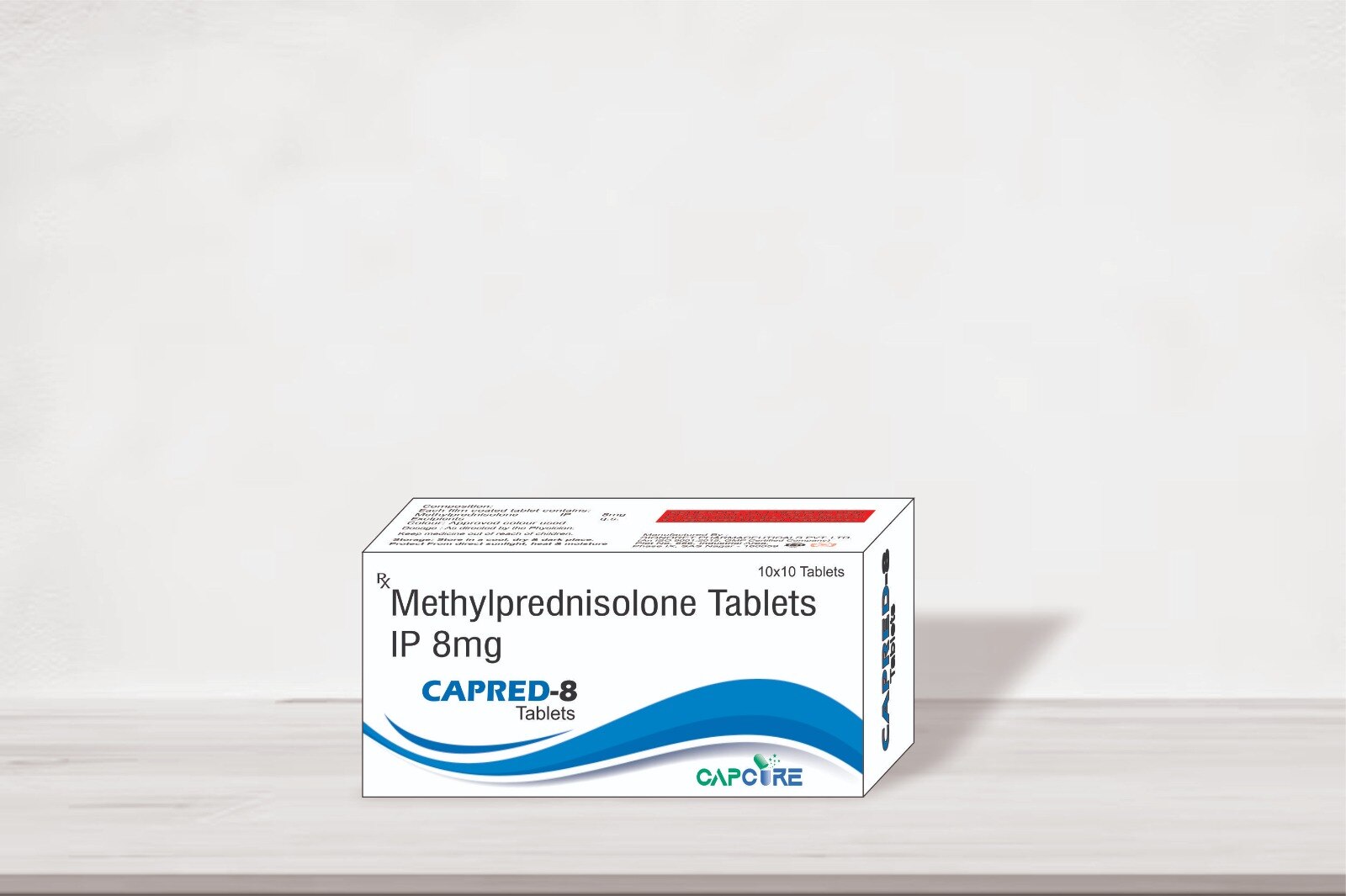 | Carped-8 Tablets Carped-8 contains Deflazacort 6mg/8mg, a glucocorticoid with potent anti-inflammatory and immunosuppressive properties. View product → |
Frequently asked questions
What should Carped-8 formulation support include?
It should cover the active ingredient, excipient selection, manufacturing process, tablet specifications, packaging, trial batches and documented reproducibility.
How do you compare Carped-8 trial formulations?
Compare assay, content uniformity, dissolution, tablet dimensions, hardness, friability, disintegration and appearance against the same acceptance criteria.
What evidence is needed for Carped-8 scale-up and release?
Request development reports, master manufacturing instructions, batch records, stability protocols and results, analytical methods, and finished-product release data.
How do you assess a Mohali formulation and manufacturing partner?
Review its GMP controls, technical documentation, quality systems, manufacturing capacity, change-control process and ability to reproduce the approved formula at commercial scale.
Keywords